Around 17 million people speak Khmer. English accounts for roughly 41% of all web documents worldwide. Khmer accounts for about 0.012%.
Until now, these were the numbers we reached for whenever we explained our Cambodia program. They show the gap well, but statistics contain no people and no stories.
So we sat down with the two people leaving for Phnom Penh: Country Manager Yoo Dong-heon and Senior Manager Sor Mayura. The conversation took place before they boarded the flight to Cambodia. One of them is going for the first time. The other is going home.
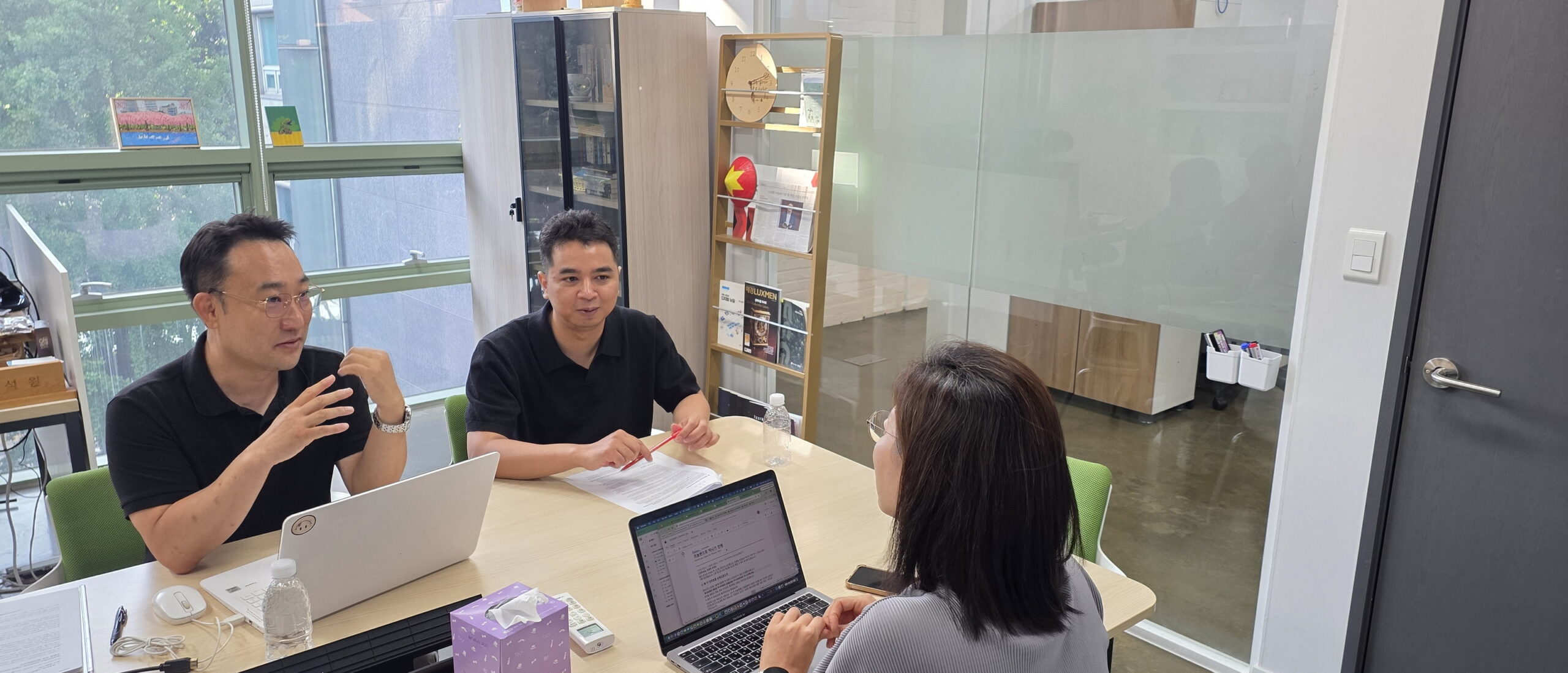
The One Going Home: Senior Manager Sor Mayura
In 2014, Mayura was a fourth-year university student in Phnom Penh. Unsure of his own coding skills at the time, he heard about a program that offered software training and Korean language classes together, and even connected graduates with jobs in Korea. He applied to a software talent development center that KOICA had set up in Phnom Penh with Korean companies. The training was free.
More than 100 people applied. Candidates moved through stage-by-stage coursework, and at the end each presented an individual project. Korean companies selected their hires on the spot.
“I never imagined that I would actually be selected after the training and end up working in Korea.”
Mayura first came to Korea in 2015 and worked in Seoul, then moved to Busan to study AI in graduate school. Most of his career has been built at Korean companies. This time he returns to Phnom Penh alongside Yoo, as the person responsible for delivering a KOICA program.
Talent that development cooperation trained is going back to carry out development cooperation. AIWORKX did not design this arc. It is simply the path his career has already taken.
We asked why he chose this path.
“I am someone who got an opportunity through a development cooperation program that linked training to employment. Now I get to lead the same kind of program as a planner and an operator, and create for the young generation in Cambodia the opportunity I received. That is why this work feels genuinely meaningful to me.”
Could You Use Khmer While Studying AI?
“During my studies, Khmer was almost absent from research. Textbooks, tools, datasets, everything was in English or Korean. When I used LLMs like ChatGPT or Gemini, the answers for English documents and data were satisfying and helpful. When I tested in Khmer, the misunderstandings were everywhere.”
That gap left him with one conviction.
“I thought that without enough resources, we would remain nothing more than users of AI built by other countries. If we want AI of our own, we have to start by building our own datasets and models.”
This program is designed so that young Cambodians grow into leaders who build and run businesses themselves. Mayura had already lived that sentence, in his own experience and in his own words.
He also described, in concrete terms, recent tests of Khmer speech recognition and text-to-speech. The AI mispronounced words, got numbers wrong, and at times failed to understand naturally spoken Khmer.
“There are cases where the sentence is technically correct, but a Cambodian cannot understand it. That is the problem. The models were trained mostly on formal written language.”
The problem was not only the amount of data. Khmer writes words without spaces between them, and spacing is used instead to join clauses. It has a very large consonant inventory, along with many subscript consonants and special characters. Even the numbers have their own Khmer numerals, separate from Arabic numerals. The low-resource language problem does not end with the single sentence ‘there is not enough data.’ Mayura explained why, using his own mother tongue as the example.
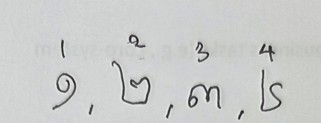
Top row: Arabic numerals 1 to 4. Bottom row: Khmer numerals.
The One Going for the First Time: Country Manager Yoo Dong-heon
Yoo is in his sixth year with the AIWORKX Data Business Division. He has served as a project manager building and managing AI training data, from data construction projects for B2B companies such as LG Chem, Kakao Brain, and POSCO to public projects for the National Information Society Agency (NIA). In 2025, the NIA data upcycling project he led was selected as an outstanding project, its results were presented at a lead agency under the Ministry of Science and ICT, and three related patents were filed.
Before AIWORKX, Yoo worked at Crown Confectionery and in duty-free retail, handling domestic and overseas sales, managing international staff, and running store operations. He has handled data quality, sometimes called the basic science of AI, and he has worked in the field alongside people of many nationalities.
Data construction, commonly called labeling, can look like simple work from the outside.
What Separates Good Data from the Rest?
“In today’s market, good data means structured data that AI can understand well. The trend has moved from ‘big data’ to ‘good data’ and now to ‘AI-ready data.’ In the big data era, more was better. As AI advanced, quality became the priority.
No matter how much data you have, low-quality data produces wrong results, so accurate and refined good data mattered. But in the generative AI era, even data with volume and quality does not count as good data unless it comes in a form AI can immediately understand and use. Otherwise you get hallucinations and answers that make no sense.”
Yoo gave two Korean words as examples: ‘nun’ and ‘siwonhada.’ Nun means both eye and snow. Siwonhada can describe a cool breeze, the chill of an air conditioner, or the relief of sinking into a hot bath. People tell these apart from context. AI does not.
“What matters is data that captures the semantic relationships between elements, the context, and even the cultural nuance. That is why ontologies and knowledge graphs have become so important recently. The data we build in Cambodia will not be built simply to secure volume. We intend to build data that holds Cambodia’s language, its culture, and the context of the field.”
Can What Worked in Vietnam Simply Be Transplanted?
AIWORKX is a social enterprise whose starting point in Korea was hiring people from underserved groups for software testing and autonomous driving data construction. The company extended this model overseas and has run an ODA program of a similar nature in Vietnam. We asked what has to be different in Cambodia.
“We are not transplanting it as is. We are redesigning it to fit the local context. Even after we wrap up the KOICA IBS program five years from now, the goal of establishing the Cambodia branch is a self-sustaining structure in which the local staff carry the AI ecosystem forward on their own, as IT planners and developers. What matters is building a structure that remains after we leave.”
Yoo travels with employee number one, Mayura. He summed up Mayura’s role in a single word: ‘bridge.’ Connecting the local team with AIWORKX, supporting the growth of colleagues, and growing into a leader who carries the local ecosystem forward in Cambodian society. So what does Yoo see as his own role as country manager?
“As country manager, I believe my role is not only to grow the company but also to create an environment where the colleagues I work with can grow. In Korean, adding a single dot to the word for embrace, po-ong, turns it into the word for inclusion, po-yong. I want to be a leader of inclusion who goes beyond the physical embrace and warmly takes in the other person’s thinking, culture, and heart.
I will work to create good synergy with our Cambodian colleagues on the ground and to have a positive influence on Cambodian society. I also want to bring the AIWORKX culture to Cambodia.”
What It Means for Two Countries to Work Together
The two were already finding their rhythm. Mayura has lived both sides, and now acts as both participant and facilitator. We asked what a Korean organization should know first when working with Cambodian colleagues.
“When Cambodian developers are given instructions, they focus on completing the feature and delivering it. Writing up the process in a report or documenting it is often treated as extra work, rather than as part of the deliverable or the process.”
He also pointed to the misunderstanding that runs the other way.
“In Korea, people deliver instructions verbally and assume that no questions means everything was understood. Cambodians often answer yes and then struggle alone to understand and figure things out. It is important to explain clearly and to build an environment where people can ask again and confirm with each other.”
The first thing Yoo asked of Mayura was the same. Keep asking when unsure, write things down for each other, and leave records so that both sides can confirm they understand. The self-sustaining structure was starting not with a grand declaration but with this everyday design of communication.
Five Years On, Who Should Be in the Phnom Penh Office?
Asked who would need to be in the Phnom Penh office five years from now for this program to count as a success, Yoo brought up the idiom yujongjimi (有終之美): the beauty of finishing well.
“Anyone can start. Carrying something through to the end and succeeding is not easy. The ending proves the person, and the difference shows at the end.”
“If, five years from now, our Cambodian staff are meeting clients themselves, partnering with companies, training new employees, and building AI and data businesses, then we will be able to say that this beginning was a success.”
Mayura has turned that sentence into a career. Yoo is going to turn it into a structure. Cambodians standing at the center of the business and building the organization, the business, and the technology themselves: the success the two of them envision points to the same place.
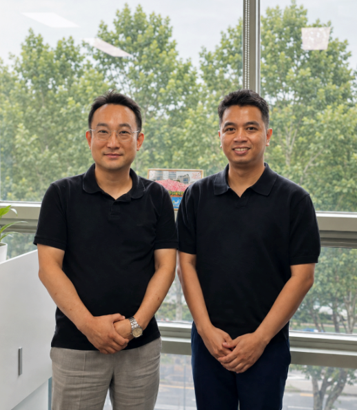
PAVE BY AIWORKX
Stories of the people behind the technology
We send interviews like this one in a single email on the second Thursday of every month.
Subscribe →